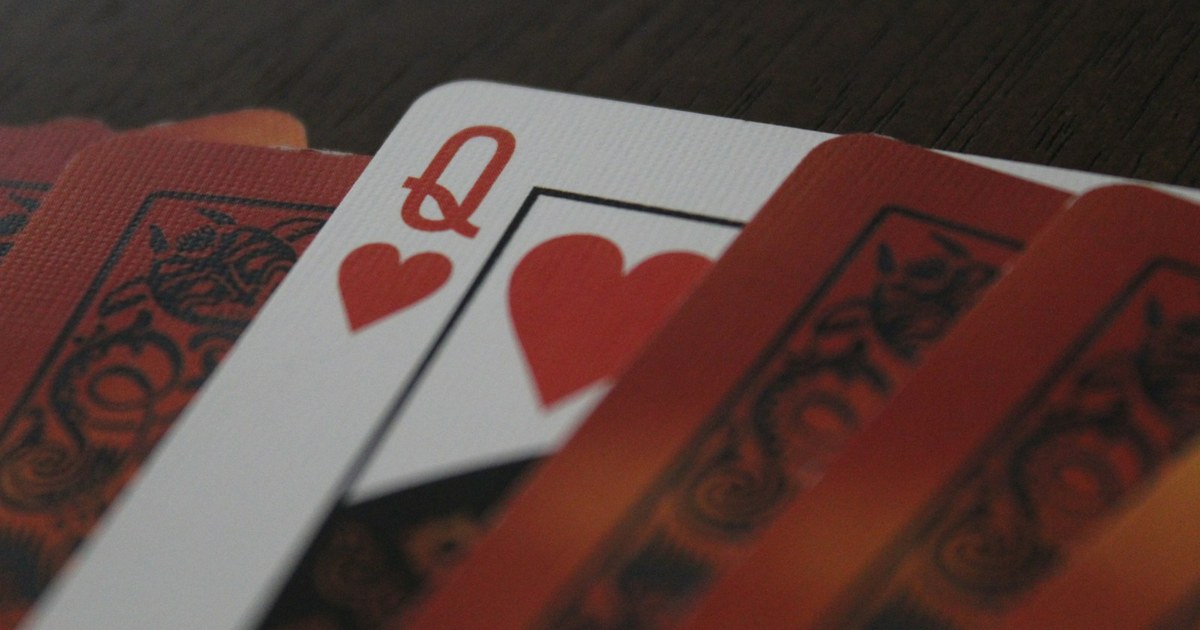
Overpair versus top pair is one of the most common flop confrontations in Texas Hold’em, and one of the most lopsided when the ranks are two steps apart. Here is the exact matchup, with numbers from a large simulation rather than a guess.
| Matchup | Overpair wins | Top pair wins | Ties |
|---|---|---|---|
| Qs Qh vs Jd 9c on Jh 7d 3c | 79.9% | 20.1% | 0.0% |
The two hands, defined
An overpair is a pocket pair higher than the top card on the board. A top pair is a pair made with the board’s highest card. In this matchup both definitions are clean:
- The overpair holds Qs Qh, a pair of queens.
- The top pair holds Jd 9c, a pair of jacks with a nine kicker.
- The flop comes Jh 7d 3c.
The queens sit above the jack that tops the board, so they are a true overpair. The jacks use the board’s highest card, so they are true top pair.
The result, and what it means
Simulated 200,000 runouts with a standard 52-card deck (single model, named here because all probability claims on this page belong to it): the overpair wins 79.9%, the top pair wins 20.1%, and ties happen 0.0% of the time.
The logic behind the gap is simple. At showdown, a pair of queens beats a pair of jacks. The top pair cannot win with what it currently holds, so its 20.1% comes entirely from improving on the turn or river: catching a jack to make trips, catching a nine to make two pair, jacks and nines, or the rarer runouts that build a straight, a full house or even four of a kind. A flush is impossible for it on this board, since no suit can appear five times.
One nuance about paired boards: a board that pairs the seven or the three by itself upgrades the overpair to two pair (queens up) while the jacks only reach jacks up, so the overpair stays ahead. But a runout that gives the top pair its own improvement, a jack or a nine, can outweigh that. In short, the rank order that favors the overpair keeps holding unless the top pair catches real cards.
How to use the number
Use it with its premises. If the top pair faces an all-in on this flop, its call needs less than 20.1% equity to be profitable in this simplified model, where no more betting happens after the call. If more betting is possible on later streets, the comparison changes and must be redone with the new price.
From the overpair side, the number says the hand is a strong favorite but not a lock: one time in five, the board improves the top pair. That is exactly why “my queens beat jacks” is true at showdown and still not a reason to treat the hand as unbeatable before it gets there.
FAQ
Is an overpair always higher than top pair?
By definition, yes: an overpair is a pocket pair above the board’s top card. But the board’s top card can change on the turn or river, at which point the label changes with it.
Why can’t the top pair make a flush here?
The top pair holds Jd 9c on a Jh 7d 3c flop. Counting any suit across all seven cards, at most four cards of one suit can ever be present, so five suited cards never assemble.
Does the board pairing save the top pair?
Not by itself. A paired board gives the overpair two pair as well (queens up against jacks up), and queens still outrank jacks there. The top pair’s real improvements are catching a jack or a nine, or the rare bigger runouts.
Where can I check numbers like this myself?
Use a poker odds calculator, enter both hands and the flop, and compare. The hand rankings chart helps you see at a glance which made hands sit above which.
This comparison is one of many in our vs series; each page states its model and premises so the numbers mean the same thing every time you read them.